Tuesday, January 20, 2009

The 1st Annual Stavers Awards Presents: The Top 12 Albums of 2008, Part II

2008 was a great year for music all around, without question. From genre to genre, music fans were greatly rewarded with many pleasant surprises and much fewer bitter disappointments. And while the corrosive, festering plague we call the “mainstream music industry” continues to exist, and even after a diabolical menace known as Soulja Boy (*shiver*) once threatened to destroy the medium as we knew it, 2008 even showed glimpses of change there, most promisingly in the hearts of its people, the consumer. It seems apparent to me that they are becoming more open-minded, beginning to break loose of the restrictive chains the record labels have placed on them. Not just the business, but the art, is now poised to benefit from these gradual changes.

So how exactly does one choose a single album to be named “the greatest” when so many vital competitors exist? It’s a question all reviewers must face when they choose to boil albums down to their cores in lists or awards, and there’s no universal answer. To me, though, the winner deserves to be an album which reminds what music really is, because from time to time it is hard to lose sight of that common perception. Music is the expression of emotion through sound – a fair enough premise – and yet most artists in the medium limit themselves to just one of the infinite emotions we possess. We see love in Fleetwood Mac, depression in Nirvana, hatred in Slayer…but in some, we see these emotions ebb and flow together as naturally as the ocean tides, as they do in the human spirit. For outstanding achievement in ever-difficult task to emulate human nature through flawlessly executed song-writing, The Stavers Awards are proud to name this album to be the #1 Album of 2008:

1. Opeth - Watershed


So…where to begin on this one? I suppose it’s notable to mention for anyone who has never come into contact with the musical enigma that is Opeth that they have been producing almost universally-acclaimed albums since the early 90’s, and have since become nearly synonymous with progressive metal. But while they have never been ones to be restricted by boundaries or to avoid new pathways, Watershed is perhaps the most pivotal moment in their history. In almost completely changing the foundation of their sound which has been but tweaked and altered since its creation with 1998’s My Arms, Your Hearse, Opeth re-emerged from a silent metamorphosis this year to become an altogether better group of song-writers and performers. Is Watershed their greatest album ever made, as the name may imply? Most critics seem to think so, but it may a few years until I am ready to confirm my own beliefs. What’s more relevant as of today is whether or not Watershed better allows the band to more aptly present their formidable blend of brilliant, non-traditional song-writing and unparalleled emotional climaxes to the world, to which the answer is undoubtedly yes.

The changes are perhaps due in part to some critical changes in Opeth’s usually steady line-up. The loss of long-time guitarist Peter Lindgren and drummer Martin Lopez since the release of their last album was a drag, but the new entries bring fresh elements to the table in their stead. The explosive, tri-tone riffs that dominated the group’s more brutal moments are less prominent here, and the guitar in general takes more hints from classic and early prog-rock in regards to distortion and layout; the result is a sound that is thinner but more flexible and varied. The new drummer’s black metal roots more than account for any lost aggression, as the more sophisticated beats probably represent the best drumming the band has ever had. The most important change, no doubt, is that Per Wiberg, the keyboardist they recruited for 2006’s Ghost Reveries, finally feels like a core part of the band when playing in this style. Whereas many Ghost Reveries songs felt like classic Opeth with subtle keyboard sounds in the background, Watershed songs often find themselves driven by Wiberg more than or as much so as his fellow bandmates. This furthers the classic rock vibe, and really lets the band’s obvious Pink Floyd influences shine to a crystal sheen. But let’s not fool ourselves into thinking that Opeth isn’t still prominently directed by vocalist, guitarist, and songwriter Mikael Åkerfeldt. With flawless guitar prowess, an awe-inspiring growl, and probably the best clean baritone vocals I’ve heard, it’s hard to think of a more talented frontman.

But really, it’s hard to generalize how these elements work so perfectly when fused together, so we’ll have to breakdown the album by a track-by-track basis. It kicks off with Coil, a relatively short song by Opeth standards (roughly three minutes) that serves as more or less an intro the conceptual story Watershed tells of a grief-stricken royalty and his former lover. It’s a perfect way to segue into the epic masterpiece that awaits, carried not only by Åkerfeldt’s masterful vocals but also those of guest singer Nathalie Lorichs. Yes, the “guest female vocalist” horse has already been beaten into a puddle of smashed organs by now, but not only are the vocals beautifully done, they also make sense in the context of the song (a rarity, for certain). It begins to be apparent as her voice fades and the acoustic guitars carry out their final notes, however, that Coil represents both the eye of the storm. What follows is Heir Apparent, probably amongst the darkest and heaviest Opeth tracks ever written. Åkerfeldt's guttural growls and tortured screams serve as the perfect vehicle for the equally agonizing lyrics, whilst a torrent of dark energy conjured by the guitars and keyboards parlays the experience. There are many twists and turns along its nine-minute running length, but easily the best is when the acoustic breakdown halfway through suddenly explodes into a cavalcade of blastbeats, alternate picking, and insanely deep howls in what is probably the single heaviest Opeth moment. If that doesn’t get your heart racing, nothing will.

As hard as a song like that is to top, the band achieves just that with the next track, The Lotus Eater. Beginning with a graceful hum set to a backing of violins and ending with an eerie sequence of conversations and sound effects that would make Pink Floyd proud, the song is between is probably one of the best showcases of fluid and natural song-writing I’ve seen in my four-to-five year music-listening career. There are more stand-out moments in this one song that many entire albums have, yet the transitions between them never seem unnatural or forced (that’s right, we’re all looking at you, Beck). It’s a roller coaster ride of emotions, the perfect representation of the definition of music presented earlier. I wouldn’t dare spoil all of its magic moments, but one deserves special praise: during the mellow section in the song’s middle third, there comes a point where the increasingly distorted and quickened solo segment gives way to a keyboard rise. When that rise reaches its peak, the song suddenly drops into a keyboard-and-bass solo segment that sounds like a cross between funk and NES-style video game tunes. Yeah, I wasn’t kidding when I said that these guys weren’t afraid of boundaries. The Lotus Eater is my choice for the best song of 2008, bar none, and if you disagree…well, I certainly respect your opinion, but I also hope that you get hurt somehow. Perhaps by an aluminum bat. Held by me.

After that moment of genius passes by, there’s plenty more to be had, but in a different capacity. Ditching the hands-on approach held by the previous two songs, Burden drops the “metal” portion of the album and delves into the band’s mellower, more classical side. Distortion is largely dropped, but the solos and melodies often dart about as swiftly and lightly as fireflies in a way that hybridizes jazz with arena rock. Åkerfeldt’s voice does an even better job of carrying the song here than in most, demonstrating that he works equally well in either element. Perhaps the coolest part of it all, and probably the most unique moment on the album, is saved for the end; Åkerfeldt starts playing an acoustic riff repeatedly that at first sounds beautiful, but as time passes someone begins to gradually detune his guitar while he’s still playing. No, stop. Do not attempt to set up an eye appointment. You likely read that correctly, and it likely caused your head to explode. This segment actually gave me chills the first time I heard it, but don’t take my word for it; listen to it yourself.

Now compared to moments like that, the next song, Porcelain Heart, may seem a tad pedestrian. It takes my vote for the weakest track on the album, but even then the exchange between hard and soft moments makes this one special – not to mention it features a couple of quick tricks, including a sudden and massive drum tempo shift that will undoubtedly catch you off guard the first time you hear it. If anything, Porcelain Heart does well to set up for Watershed’s eleven-minute epic, Hessian Peel (bizarrely, I could only find a link for the second half of the song). This is where the proggiest influences the band can muster are set loose, and it’s also the most jarringly divided song, split between gorgeous tranquility and unstoppable brutality. It even features a rarely used musical tactic: backmasking. Early on, you’ll hear a vocal segment recorded backwards, which when rewinded reads, “Out on the courtyard, Come back tonight. My sweet Satan, I see you”; a subtle nod to the infamous Stairway to Heaven backmasking myth. Rest assured, only The Lotus Eater beats out this track in its sheer song-writing prowess. Finally, Hex Omega exists to wrap up the album’s poetic tale, and does the job nicely. The uplifting riffs in conjunction with the smooth verses make an appropriately grandiose ending for an equally grandiose album.

These seven masterpieces probably would’ve been enough, but nope; the band had to go ahead and spoil us. Along with the special editions of the album come three bonus tracks, two of which are covers. The original track, entitled Derelict Herds (no link for this one, sorry), is a great song in its own right, and was probably left off the album due to its irrelevance to the plot, which is a shame given how well in contrasts both the light and dark sides of the band. The covers, however, reveal a completely new side to them entirely. Bridge of Sighs, originally by English rock guitarist Robin Trower, seems more or less the perfect fit for the new classic-rock influenced style of the band, and Åkerfeldt’s vocals do its sound great justice. The cover of Marie Fredriksson's Den Ständiga Resan, meanwhile, expresses their folk side well, but is more than anything an excellent showcase for Åkerfeldt’s voice, and in his home country’s native tongue, no less. If you aren’t a believer in him by the end of the album proper, this little bonus will change that, guaranteed. Finally, as an added treat, the recently released Burden single comes with even more goodies. The first is Mellotron Heart (no link here either, I tried), a recreation of Porcelain Heart with only the mellotron and mini-Moog synthesizers as instruments. It’s no replacement for the original, but it’s still a fun little bonus. The final B-side is yet another cover, and an unexpected one at that: Would?, by Alice in Chains, the famous grunge group. It’s hard to judge a song of this format to Opeth's core work, as grunge is far less technical and far more linear by nature, but its certainly good for what it is, and a faithful recreation of the original. Consider it a cherry atop what was already a great topping-soaked sundae.

Yeah, I know what you’re thinking by this point: where’s all the hate? Where’s the cynicism and the nit-picking that so dominates the lives of reviewers? And the truth, in all honestly, is that I couldn’t think of a single reason to waste any of my precious critical bile on this album. My sole problem with it – which will mean little to newcomers – is that in streamlining the song dynamics and diversifying the sound, the band may have had to sacrifice some its overwhelming power, the kind that made previous albums like Blackwater Park almost absurdly gripping. But if this album truly is representative of permanent change for the group, and if a future album can combine the past and future Opeth together, then…well, I think I could rest easy declaring it to be the greatest album I would ever hear.

At this point it may simply be an understatement, but Watershed deserves accolades from here to eternity, as well as your undivided attention. Listen to it. Love it. Cherish it. And if you can think of a single greater album that came out in 2008, please tell me…but think hard about it first, or else I may have break out that aluminum bat of mine.


Recommended First Listens: Coil, Burden, Porcelain Heart, Hex Omega
Stavers’ Top Picks: Heir Apparent, The Lotus Eater, Hessian Peel
Bonus Achievements: What, Album of the Year wasn’t good enough for you?

Sunday, January 11, 2009

The 1st Annual Stavers Awards Presents: The Top 12 Albums of 2008

Well, it's taken nearly a month to construct, write, neatly package, and deliver it, but here it finally is: The 1st Annual Stavers Awards, and the Top 12 Albums of 2008! Each entry has earned its place through the exceptional demonstration of songwriting, muscianship, and generally being fun to listen to, but keep in mind that these elements have been judged solely by me, the writer. If the list seems biased in any way, that's because it technically is. So if you disagree with the placement (just know that the race was pretty tight, especially towards the top of the list) or if you think I missed an important contender, then...well, that's what the comments section is for!

So here's how this works: each album will be accompanied by a miniature review containing the reasons for why it was selected, along with three informational subcategories. The first, Reccomended First Listens, lists the songs I believe serve the best for being introduced to the sound of the album (important to getting used to the more extreme stuff on the list). Stavers' Top Picks, meanwhile, are the songs that I have chosen to be the best of the lineup, the elite ones that demonstrate the best that the album has to offer. Finally, there are the Bonus Achievements, tiny awards given for special provisos the album gives us (please, don't take them too seriously). Oh, and you may be wondering, "why twelve, of all numbers?". And I have a perfectly good answer to that....
....
....
....
....so with that all explained, we can start this countdown of awesome! The envelope, please...


12. Jeff Loomis – Zero Order Phase


Why the public has yet to embrace instrumental music has always puzzled me; given the general abhorrence of respectable lyrics in mainstream culture one would think it would make a perfect fit. For those of us who can appreciate a break from the human voice for a little bit, the guitarist from Nevermore made a nice little solo project entitled Zero Order Phase. There’s no real meaning behind the titles of either the songs or the album itself; all the emotion is spurred from the music itself, which is obviously done quite well. One could argue that the entire experience cycles around Loomis’ mastery of sick guitar licks, and that’s essentially an apt ideology. Still, the guitar-work alone is some of the best 2008 had to offer, which makes Zero Order Phase more than eligible for a spot on the list in my book.

Recommended First Listens: Azure Haze, Sacristy, Departure
Stavers’ Top Picks: Jato Unit, Devil Theory, Miles of Machines
Bonus Achievements: Devin Townsend Award for Solo Project Achievement, Yngwie Malmsteen Award for Exceptional Shredding

11. Meshuggah – obZen


Imagine that a rogue supercomputer from the future broke some circuits, engineered unfeasible weapons of mass destruction, and started eliminating human life with all the precision and speed mankind’s technology could muster. That, in a way, is like listening to Meshuggah’s obZen, an album which overwhelms you with its dense, mechanical orchestration of dark energy. It lands low on the list mainly for being just that, not much more than an outright metal attack, yet it remains notable for having done it so well. The drumming on songs like Bleed, for instance, will have your mouth gaping, likely due to the coma induced by the guitarist’s and bassist’s desire to numb your senses with wicked experimental lines. Repetitive, sure, and largely inaccessible, certainly, but never say it’s not without benefit.

Recommended First Listens: Combustion, Electric Red, Lethargica
Stavers’ Top Picks: Bleed, obZen, Pineal Gland Optics
Bonus Achievements: Worst Cover Art for an Actually Good Album Award, David Lombardo Award for Drumming Prowess

10. Jedi Mind Tricks – A History of Violence


Family reunions are generally awkward processes, ones where you stand in the corner hoping to your deity of choice that no one approaches you to inform you that they are a long-lost aunt or uncle with a lifetime of boring stories to make you suffer through. That’s why JMT’s seemingly natural reunion with former hip-hopper Jus Allah on A Histroy of Violence deserves such praise; it manages to reincorporate the old elements that he used to bring into the path JMT has followed in the years since his absence. Those expecting the reunion to have resulted in an older-school release like Violent By Design will scuff their feet in the dirt, but the rest of us will know we’re getting a quality product. Yeah, the vocal patterns are getting a little rusty with repeated used, and the lyrics still border on the nonsensical at times, but the production and beats are as perfect as ever, Vinnie Paz is still on of the most pissed-off rappers in music, and Jus Allah’s return provides some greater variety to the whole mix. Resident hip-hoppers will surely want to check this out.

Recommended First Listens: Deathbed Doctrine, Heavy Artillery, Godflesh
Stavers’ Top Picks: Monolith, Trail of Lies, Butcher Knife Bloodbath, Death Messiah
Bonus Achievements: Angriest Hip-Hop Award, “Family Reunion” Achievement Award, Best Beatz Prize

9. Radiohead – In Rainbows


Paradox, thy name is Radiohead. They have a vast army of loyal followers to put China to shame, yet they still exercise the freedom to expand their music into continuously different territories without losing them. That freedom took us to a strange world on the very first day of 2008 when In Rainbows was released to critical acclaim. However, I cannot in good spirits place this new experimental opus above something along the lines of OK Computer or Kid A. There’s a level of consistency on those albums, an unbreakable thread that sews songs together that made them work flawlessly, and it just seems missing on this release. Not to mention, there’s a certain wide disconnection between how the band’s members described the album and how it personally effected me; “terrifying”, for instance, is a strong word, and I would not have used it to describe the rhythmic hand-clapping and children’s cheering that accompanies the album opener 15 Step. But hey, it’s still Radiohead, and the strangeness and openness they always carry with them from album to album still remain. It’s disappointing in some ways, but In Rainbows deserves a place on the list nonetheless.

Recommended First Listens: Bodysnatchers, Nude, Weird Fishes/Arpeggi, House of Cards
Stavers’ Top Picks: All I Need, Jigsaw Falling Into Place, Videotape
Bonus Achievements: Highest Indie Band Survival Rate, “Black Sheep of This List” Award

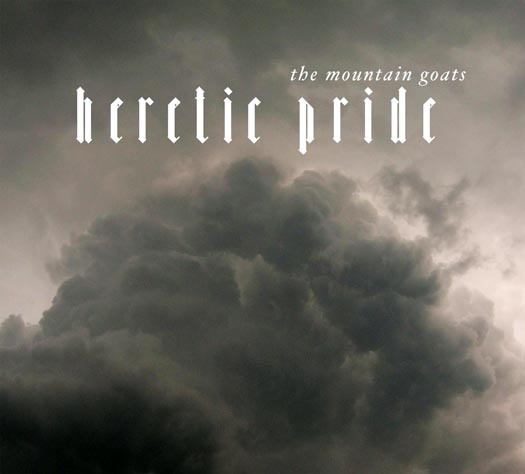
8. Mountain Goats – Heretic Pride


Alright, I’ll admit it: this one surprised me. Heretic Pride’s simplicity and seemingly infallible joy belies some pretty interesting folk-rock techniques, even if the linearity of most tracks makes them a little more predictable than usual. The poetic lyrics – and subsequently the strange voice of a one John Darnielle – are really the star here, mixing surreal visual treats with some very affirming life lessons (How to Embrace a Swamp Creature being a good example of both). I’ve heard some critics say that the album covers little ground that the Mountain Goats hadn’t covered before, but for the amateur such as myself, the album is instantly accessible while still being phenomenally well-balanced and varied. It couldn’t bring itself to compete with the more boisterous candidates on the list, but it is easily worth a glance.

Recommended First Listens: So Desperate, How to Embrace a Swamp Creature, Tianchi Lake
Stavers’ Top Picks: Sax Rohmer #1, San Bernardino, Heretic Pride, Lovecraft in Brooklyn
Bonus Achievements: Most Joyous, Creepiest Lyrics

7. Arsis – We Are the Nightmare


Combining melody and technicality has been a task that few in the music biz seem to undertake…or care about. Arsis (from Virginia, who knew?) have instead taken it upon themselves to accomplish that goal thrice in succession, with the latest victory being entitled We Are the Nightmare. In doing so, the formula does prove to be somewhat repetitive as you move from start to finish, but the mighty riffs and excellent drumwork reciprocate your patience with some truly commendable songwriting. If perhaps the lyrics seem overwrought by comparison, then it takes little to ignore them while you bask in the glory of the album’s melo-tech hybridization. It’s essentially the musical equivalent of having a perfectly-engineered power drill accurately flossed through your ear canals…although that does make it sound bad, so try to imagine that statement through the perspective of a masochist, yes?

Recommended First Listens: We Are the Nightmare, Sightless Wisdom…and if you don’t like those, then there’s no hope for the rest of the album.
Stavers’ Top Picks: Overthrown, Progressive Entrapment, A Feast for the Liar’s Tongue, Failure’s Conquest
Bonus Achievements: Most Technical, Best Attack Tool for Metal Elitists

6. Equilibrium – Sagas


Oh gee, I’ve never seen this before. A symphonic folk metal band with blackened elements that fuses guitar with violin and pan flutes melodies, singing lyrics about old Nordic stories exclusively in German? How utterly predictable.

Ok, so in all seriousness, it's really the sheer uniqueness that makes this one stand out. Everything about the musicianship is really spot-on (except for maybe the screechy black-metal vocals), but all of the folkandish touches make the songs complete. Most of them sound European in nature, fittingly enough, but traces of Latin and even Australian aboriginal culture make an appearance along the way as well. The result is an album that is truly epic; the word may get thrown around a lot these days, but it really does seem designed for the sheer girth of this album’s sound. If you can handle some extreme vocals and don’t have a problem flipping through a Germanic dictionary to understand lyrics, then this record was made for you.

Recommended First Listens: Prolog Auf Erden, Blut im Auge, Heimwärts
Stavers’ Top Picks: Unbesiegt, Snüffel, Mana
Bonus Achievements: Most Likely to Be Used in a World of Warcraft Montage Video, Most German

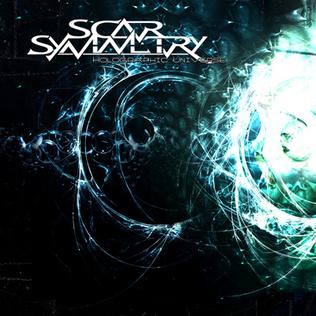
5. Scar Symmetry – Holographic Universe


There are some people out in this world (I like to call them “elitists”) who have already gone ahead and declared the entire genre of melodic death metal “dead”. The frequency with which Holographic Universe has appeared on many end-of-the-year lists such as this one seems to have shut them up pretty well, I daresay. This is because Scar Symmetry has put out nothing but high-quality of the melodeath genre up to now, and Holographic Universe is simply their most polished effort yet. The entire guitar-keyboard partnership that drives the album works tremendously well, but its really the vocals of Christian Älvestam tha push it over the top. It’s a shame that his unwillingness to cooperate with the rest of the band resulted in his eviction from the group shortly after the album was made, because his powerful death grunts and soaring singing voice are so well done here. Plus, the album takes its sci-fi theme very seriously, as the song titles and great lyrics reflect. Some of the riffs are occasionally quite samey, but that hardly derides the entire experience. Get this, if only to prove those Gothenburg-hating heathens wrong.

Recommended First Listens: Morphogenesis, Timewave Zero, Ghost Prototype I – Measurement of Thought
Stavers’ Top Picks: Artificial Sun Projection, Trapezoid, Holographic Universe, Ghost Prototype II – Deus Ex Machina
Bonus Achievements: Best Use of a Theme/Concept, Creed Award For Having a Band-Threatening Vocalist

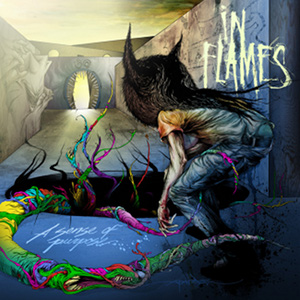
4. In Flames – A Sense of Purpose


I could probably write entire analytical tomes about these legendary Swedes if possible, but I’ll have to cut to the chase (relatively) in the name of brevity. A Sense of Purpose brewed up quite a storm as far back as late 2007, under the watchful eye of fanboys and musical cynics alike. More than likely it was because it followed Come Clarity from 2006, an album that returned the band to its metal roots after half a decade of questionable experimentation that tore their fanbase in two more violently than perhaps any other band in metal history. So, we all wondered, would the next release take the band even further back towards their humble beginnings? Was the guitar-driven sound of Come Clarity a one-time deal? Could In Flames surprise us with a masterpiece that made their classic The Jester Race sound like Miley Cyrus? The answer, as it turned out, was “no” on all counts.

Instead, A Sense of Purpose was an apt blend of everything In Flames had done thus far, freshened up and injected with cautious but successful experiments up the wazoo. In losing the rushed pace and outright aggression of Come Clarity, it regained the warmth, addicting melodies that defined the band. Yet it didn’t all make itself apparent immediately and instead unraveled with multiple listens. The strange new approach has led some to call it the worst album in the entire In Flames catalogue, while others consider it the best. The most reasoned of In Flames fans such as myself reside somewhere in the middle, for there are certainly flaws to pick at; the lyrics, namely, have taken a rather unprecedented dive in quality in some songs, demonstrating that band vocalist Anders Friden may have finally plumbed the wells of “social cruelty lyrics” completely dry after a decade or so. Apart from that, the band sounds better than it has since Clayman, with Jesper Stromblad’s guitar riffs flowing like wine once again, not to mention the best drumming the band has ever seen.

Undoubtedly the best aspects of ASoP lie in the increased variety it brings to the table after Come Clarity’s blurred line-up. The setlist ranges from short-and-sweet metal anthems (The Mirror’s Truth), spastic thrashers (Sober and Irrelevant, March to the Shore), and even largely keyboard-driven moments (Alias). Some parts even indulge in the Swedish-folk acoustic guitar interludes that sound plucked straight from the band’s debut Lunar Strain. But no one could prepare for In Flames’ most risky experiments, and indeed one of their most beautiful songs ever; The Chosen Pessimist, an eight-minute-long epic of the progressive rock mold that demonstrates just how far Friden’s clean vocals have come, evoking sounds and emotions more like those of Radiohead than At the Gates. Plus, those of you willing to search for the Japanese edition or shell out extra for the accompanying EP will find three absolutely awesome bonus tracks as well, and the luckiest will obtain one of the rare box sets that comes will a frickin’ pinball labyrinth game. Awesome.

Granted, In Flames will always have their detractors, but that’s to be expected from a group brave enough to flip their established sound upside-down over the course of just a few albums. Besides, you have to love a band that pokes fun at itself; one of the banners that advertised the album prior to its release stated “In Flames don’t follow trends…they create them!” And you know what? That’s absolutely right. They may have a long way to go to win back the hearts of those they scorned, but this new album proves that even after 14 years of twists and turns, In Flames are still not obsolete, and instead march forward with “a sense of purpose” of their very own.

Recommended First Listens: The Mirror’s Truth, Disconnected, Condemned, Drenched in Fear
Stavers’ Top Picks: Sleepless Again, Alias, I’m the Highway, The Chosen Pessimist, March to the Shore
Bonus Achievements: Most Undeserved Hatred, Best Cover Art, Most Addicting, Jesper Stromblad Award for Having Jesper Stromblad

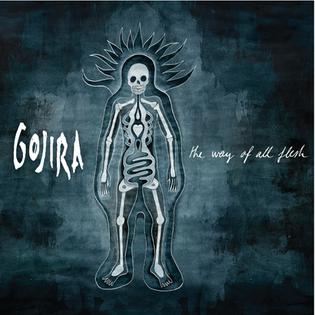
3. Gojira – The Way of All Flesh


There isn’t much to say about The Way of All Flesh that wasn’t covered in my previously written review, but I must reinforce the notion I made earlier about this album being a “grower”. On further examination over the past few months, the differences between this and 2005’s From Mars to Sirius expand ever further; the newer release is less organic (the production has been kicked up quite a dozen notches), yet eliminates the monotony and adds innumerable new angles to the songwriting. The vocals are fuller and more powerful, the drum-work god-like, and the innovations clever. When you get right down to it, TWoAF may be the apex of the path these Frenchies have strode since their first album, which makes it all the more interesting to see where future years will take them.

There’s another reason I have had yet to touch upon that takes TWoAF to the near-peak of the list, too: it once again proves that Gojira produces music for a discernable reason. That doesn’t sound impressive when phrased so bluntly, but think of all the tired, bloated rock stars or corporate-controlled prissy pop princesses who cough up new records for sheer profit or to imitate a semblance of activity. In short, Gojira aren’t in the music business for the money, but for the music, for the power that the musical medium provides in spreading the word of noble causes and spiritual beliefs. And that’s especially notable when their enviro-friendly nature contrasts so heavily against the back-drop of their hellraising sound in a way that is both ironic and distinctive. For these reasons and more, you will never find another band like Gojira, nor another album like The Way of All Flesh. Brilliant, in all possible respects.

Recommended First Listens: Oroborus, A Sight to Behold, The Silver Cord, Vacuity
Stavers’ Top Picks: Toxic Garbage Island, Adoration for None, The Art of Dying, The Way of All Flesh
Bonus Achievements: Best Lyrics, Most Likely to Rupture An Organ Through Sheer Ferocity, Best Death Metal Album to Be Made in Fran…on second thought, gimme that last one back. It’s practically a freebie.

2. Cynic – Traced in Air


Some of you may have wondered, perhaps in the black depths of a subconscious dream, what genius sounds like. Or perhaps that was just me. In any case, Cynic would be a perfectly acceptable answer to that. Their 1993 debut Focus was the first, and for a while only, proof of that, combining technical death metal with jazz fusion and progressive elements to form an instant underground classic many still regard as one of the greatest releases of all time (myself among them). In just one year thereafter the band split, however, and all of their work on the follow-up was seemingly lost. Then the impossible happened; the band reformed in 2007, and all the material that was once thought lost to time has resurfaced 15 years later. There are few albums I could consider to be worth waiting more than a decade for (you hear that, Chinese Democracy?), but I can assure you that Traced in Air is one of them.

The most important thing to know going into Traced in Air if you are familiar with Focus is that it has little resemblance to its forbearer. Undoubtedly that has left some feeling scorned, but there is no reason to fret. TiA is a nearly perfect album in its own regard, because it explores territory left unexplored not just by themselves, but by the musical community at large. Vocalist Paul Masvidal’s robotic vocoder-backed vocals return much improved, forming glorious melodies that layer perfectly on top of one another, and amongst the technical beating of Sean Reinert’s drums and the guitar’s cyclical, melodic loops. Largely less aggressive and fast-paced than Focus, it instead ensnares you in a steady, flowing river of sound, one that’s willing to burst in rapids or gently caress the shores as it deems appropriate. And if that sounds more than a little trippy, its probably because the space-age sound of Traced in Air is one of the most difficult albums I’ve ever had to explain in words. My sole complaint, and it is a minor one at best, is that at a meager 35 minutes or so, TiA ends far too soon. Nonetheless, the once-in-a-lifetime experience of closer song Nunc Stans helps ease that wound, and the general quality of the album already has me in peak anticipation of what Cynic will possibly create next to continue their legacy.

If you need any more endorsement of Traced in Air than I can provide, of course, I think Paul Masvidal does a better job than I ever could:

“We've been on an amazing journey discovering this new music and soon it will be yours. Expect the unexpected. The album is an intensely concentrated mosaic of internal and external energies, from the deepest peace to the purest aggression. There's an acquired taste that comes with a record of this density, but once your ears wrap themselves around the language at work, everything falls into place and suddenly you'll feel a sudden urge to sing, scream or maybe even cry. The album has a beginning, middle and end. The story will reveal itself after numerous listens and then you may not want to let go…”

So very true. Buy this album right away.

Recommended First Listens: Nunc Fluens, The Space For This, The Unknown Guest
Stavers’ Top Picks: Evolutionary Sleeper, Integral Birth, King of Those Who Know, Nunc Stans
Bonus Achievements: Longest Delay, Highest Payoff, Best Use of Vocoder a.k.a. Only Good Use of Vocoder, Midget Award for Being Too Short


Surprise! The #1 album gets a full review next time!

Sunday, December 7, 2008

The Cold Places of the Universe: "The Moon and Antarctica" Review

Album: The Moon and Antarctica
Artist: Modest Mouse

Genre: Alternative / “Indie” Rock
Length: 59:43 (72:02 reissue)
Release Date: June 13, 2000 (March 9, 2004 reissue) (2008-09-12)
Label: Epic
Producer: Brain Deck (Simon Askew reissue)


Somewhere in the life of every successful and long-lived group of musicians comes a time when they must make a crucial choice; to vegetate in the same style they have developed and loved from the beginning, or to take the deep risk of mending and experimenting with it. By the former path, bands may stagnate to the point of irrelevancy; by the latter, they risk alienating the fans of all that had come before and thus put their reputations on the line. And by the excessive degree to which fans can take hold of a particular band, seeing them either change or rot away is often an unbearable transition. Such results in a polarized following, one side composed of former disciples who swear by the old works battling against another of those who jumped on the bandwagon with the new. And in the process, it’s the band themselves who end up in the crossfire.

Enter Modest Mouse, the indie darling sextet that has earned accolades and praise amongst underground critics since 1993. In recent years, the band has begun to stir up fury within the more experienced loyalists as they have made the transition into mainstream attention (if somewhat limited in scope). Suddenly the band who had once recorded an EP in a garage had hit #1 on the Billboard 200 with 2007’s We Were Dead Before the Ship Even Sank, and those who felt the band had sold its soul were out for blood. Its such massive transitions that make one question the nature of past albums, as its sometimes possible to trace the gradual evolution of the band into the states they finally arrive in. Such was the purpose when I – a veteran of perhaps the most heated fan-war stalemate of all time, the on-going In Flames debate (though that it is a story for another time) – was parachuted deep into the strife to review Modest Mouse’s supposed magnum opus, The Moon and Antarctica, to see how it held up outside of a fan perspective.

Now as far as I can understand, The Moon and Antarctica was the band’s attempt to expand off the broad base cemented by their previous breakthrough release, The Lonesome Crowded West. Blame the experimentation on either a desire for greater variety or Isaac Brock’s broken jaw if you will, but ultimately for every critic who showered the album in gold stars there was another who thought Modest Mouse was edging into commercial territory; quite frankly, when a band starts licensing songs to Nissan Quest minivan commercials it can be difficult to think otherwise. Yet I can’t help but feel like the commercialization argument has gone the way of a horse that has been beaten one too many times; the glossier production values and major label status aren’t necessarily strikes against TMaA, merely differences. In fact, they often help amplify the more spacious, spacey sound the album develops, which in the land of the Indie City resides on the corner of Mature Street and Engaging Avenue, only occasionally striding into Pretentious Lane to pick up its groceries. To put it in a much less metaphor-laden way, it’s as good a representation of the indie scene as your going to find this side of the decade.

Indeed, the band’s attempts to tinker with their formula resulted in making it much more distinct. The blend of classic folk, alternative song structure and delightful synthesizing in a powerful one indeed that will usually leave the listener immersed up to his or her eyeballs. Though it doesn’t offer too much room for technical chops, that’s hardly what the record is about. Instead, it’s quite keen to manipulate this mellow, laid-back foundation into a variety of different moods throughout the setlist, from sullen and plodding (Perfect Disguise) to bouncy and joyful (Life Like Weeds), and even moments where these moods are exchanged frequently (3rd Planet). The twangy guitar-sound does, however, remain roughly the same throughout, which makes most songs blend together. It also makes the longer tracks like The Stars Are Projectors outlast their welcome, even if the addition of some moderate tempo changes does manage to shake things up. Fortunately, plenty of other moments, like the swooping keyboard dips and dives in Dark Center of the Universe and the surprisingly aggressive opening to A Different City, stand out.

Strangely, the member of the group whose contributions I am least enthusiastic for is the one who practically drives the band, Isaac Brock. His singing style is very unique, for sure, but it sometimes stands in stark contrast to everything else in a song, and eventually becomes rather grating as the album wears on. He’s more of an acquired taste than anything, and due to the aforementioned broken jaw his appearances are actually somewhat limited by alternative standards, so for most it won’t even be a factor. Yet I also have a bone to pick with the lyrics; a lot of people cite them as being exceptionally clever and insightful, and I would agree to an extent, but simply can’t muster the same enthusiasm. Most are open to interpretation – hardly an issue on its own – but without some kind of binding context, many of them could be about…well, anything. Not to mention that many tracks take it into themselves to repeat the same redundant lines several times over; if you don’t know what it means the first time, the next few times will only be bound to reinforce that notion. With enough studying, however, some personal meaning for each song should fall right into place (*winkwink*) for you. Oh, and a special shout-out has to be made to Wild Packs of Family Dogs, which put the dainty little images of dogs eating people and “crying dust blood” into my mind’s eye. A happy album, this is not.

By this token, TMaA personally falls into the little niche of strong, yet sometimes flawed, curiosities. While there are plenty of nitpicks to be made, the overall sound of the album is powerful enough to warrant praise without trespassing previously tread territory – the very definition of a successful experiment. This was certainly not a diversion to be forgotten, either, as traces of the more airy, calmer sound still exist in the songs of newer fare from the band. And for those out there hooked on the atmosphere but not the presence of Mr. Brock, this album will likely provide your best escape. Respectable lyrics and a moody environment combine to make TMaA worthy of attention, both back in 2000 and now.

So what have I now to say to the fanboys of each faction of the Modest Mouse debate? Well to be honest, I probably didn’t even need to hear the album to tell all of them to stop their futile actions before they all give themselves brain hemorrhages. To the newer recruits, I sayeth now that TMaA is a fine album that needs no disrespect, even if you prefer the more widely known, two most recent releases. I have even less comforting things to say to the other group, who will simply have to deal with whatever changes the band has felt are best for them, be it for reasons of nobility or greed. In either case, the past is irreparable, and in this case for the better.


P.S. : Apologies about the delay. My computer seems to have attained some kind of nasty Adware virus that’s slowing down my entire computer, and even preventing me from using some programs whatsoever. I’ve been trying to work my way around it, and hopefully my computer will be clean and running at full speed again by next week.

Saturday, November 22, 2008

A Totally Serious Review, I Swear: "Appeal to Reason" Album Review

Album: Appeal to Reason
Artist: Rise Against
Genre: Melodic Hardcore / Punk Rock
Length: 48:23
Release Date: October 7, 2008 (2008-09-12)
Label: Geffen
Producer: Bill Stevenson and Jason Livermore


When I got asked to review a Rise Against album, I ran back home and grabbed my iron helmet and wooden shield, because I was about to run the gauntlet. Rise Against hails from the same line of punk-rooted protest bands that have been running rampant across corporate America ever since the Bush administration started shooting itself in the foot (that’s 2,345,670 bullets fired into the big toe and counting!) and there’s hardly a demographic I hate more; the smug half-baked philosophy, the restless complaining, the same four or five chords and drum beats recycled over and over and over until you want to run for Congress, work your way up the ranks, and finally submit and authorize a bill that forbids the little pricks from coming within 500 miles of freedom. So Rise Against had the tall order of trying to change my cold, steel-plated cynical beast-mind into thinking they could possibly be any different. The result…

…is that they totally did. Wow. I couldn’t have believed it until this album had arrived before me, but I was wrong about the entire pseudo-punk movement from day one. In fact, Rise Against is the most valuable of music bands because it taught me an amazing lesson: that you can sell five figures within the first week of a release and even have your own line of shoes purportedly manufactured by slave labor and still pretend to be a pot-smoking, Molotov-tossing anarchist rebel. How inspiring!

The magic begins with Collapse (Post-Amerika), which in no way resembles anything ever done before, not even American Idiot...hell, not even themselves on past albums. The single-tempo, emotionless riffing, and generic hardcore shouts would sound utterly monotonous and repetitive from any other band, but Rise Against makes them work. How? Alas, their genius is far too much for me to describe in simple man-words. And behold, for when the next track begins, so does the exact same pattern and song structure! Such is their brilliance that they repeat the exact same formulaic compositions a grand total of 13 times…and with 13 being an unlucky number, the act serves as flawless testament to their bravery. Only rarely do actually interesting leads or notable bass lines ever appear to fuck things up, but the producers were so brilliant as to edit them out to their last breath as not to spoil the perfection. The lone exception to this ever-so original formula is an acoustic song entitled Hero of War, so originally titled and so not made up from the remnants of discarded Bob Dylan B-sides that it would make the likes of Leonardo da Vinci and Wolfgang Mozart cry. Why, so great is this beautiful track that it could very well rise those fallen geniuses from the dead, officially making Tim McIlrath the second-coming of Jesus Christ. No wonder so many people rabidly worship these awe-inspiring musical heroes!

But if there is any reason to bow down before the likes of this ground-breaking band, it is their lyrics, whose majesty and truth ring like the bells of Heaven’s highest, most ornamented towers. They speak of a terrifying fascist government that will in no way disappear a mere three months after this album’s release date, and one that has in no way been spoken of by any other musical act. Nope, not even Green Day. And how, you may be wondering, can such beaten-to-death lyrical clichés such as “fall[ing] from grace”, “desperate eyes”, and “the strength to go on” possibly combine to make these inspiring call-to-arms messages? Again, I could not possibly explain it, but totally not because they couldn’t. Because they could. In fact, they do it so well that they don’t even need to create solutions to the political problems they so desperately claw at like merciless, blood-thirsty kittens. Thus, these songs will ring throughout the back alleys of all the greatest organizations of protest and resistance, such as Hot Topic and McDonalds, from now until the end of mankind. Only the greatest musicians could create music as such that it will never become dated, certainly not in, as aforementioned, three months from now. You know, when the man they are trying so hard to condemn is replaced by a liberal reformist who the country so strongly supported in a fairly recent election. Oh no, certainly not then.

And so I sayeth to you, in the spirit of the mightiest revolutionaries of our time – from Lindsay Lohan to Justin Timberlake – let your voices of pre-pubescent confusion and conformism be heard by purchasing this downright irreplaceable masterpiece. And as you half-heartedly pound your fist in the air, pretending to fight an evil that has already been fought by people whose actions actually matter and whose criticism is not just limited to needless whining, remember that you support a band whose music is definitely not just a clone of a million other bands who came before, whose imagery is completely and totally unique, and who honestly, undeniably, unsarcastically, doesn’t suck balls.

Sunday, November 16, 2008

Mediocrity Magnetic: "Death Magentic" (Delayed) Album Review

Album: Death Magnetic
Artist: Metallica

Genre: Thrash / Heavy Metal
Length: 74:46
Release Date: September 12, 2008 (2008-09-12)
Label: Warner Bros., Vertigo, Mercury, Universal Music Japan
Producer: Rick Rubin


Forget the Year of the Rat…2008 has so far been the year of metal. Aside from the innumerable releases from many of the genre’s top acts, we’ve seen long dormant metal bands choosing this year as the time to make their big comeback. Cynic has returned to the studio after a 15 year hiatus; AC/DC has stepped back into the limelight with a new album; and other bands that have been long out of commission like Atheist and Wintersun are working on new material early into 2009. Hell, if all goes to plan then Chinese Democracy might actually be released this year! But I have no doubt that it is the recent return of Metallica that will have earned the most attention and sales by next year. Granted, they may have been gone for only a five-year gap, but since the last record they released was St. Anger, considered by many to be a utter travesty of chaos, muddled confusion, and making absolutely no sense whatsoever, the world definitely wanted to know whether or not the band could possibly make the saving throw and restore their former glory. So now that Death Magnetic has been out for a couple of months now, we can finally ask the ultimate question: has Metallica made a comeback?

Unfortunately, that still isn’t a very easy question to answer, as the definition of comeback isn’t very clear for a band such as Metallica. Keep in mind, this is a group of individuals whose in-fighting and apparent hatred for each other caused wave after wave of horrible decisions, both inside and outside the recording booth; undoubtedly that was part of the cause of St. Anger’s wretchedness and the infamous Napster incident. Now, they seem to have overcome the hurdle of growing older, come to grips with their themselves, and generally kept a level-headedness that is expected of good musicians. So when looked at in the terms of whether or not Metallica has salvaged the semblance of a successful career, then yes, Death Magnetic is a glorious revolution. When looked at musically, it is considerably less so. Granted, it fixes all the mistakes of the past release…but seemingly does so by retreating deep into the rusty catacombs of their old works, with little in the way of innovation. So if it’s not a failure and not a complete success, then we are left with a single word left to describe Death Magnetic, one that still serves as a painful blow to such a famous band: average.

Yes, for all the hyped shouts of glee that Metallica had finally become themselves again, they are still just average. And the key factor in that mediocrity is that the album is just plain dull. Dull, dull, dull, so very dull. Most riffs resemble watered-down versions of those we heard on Master of Puppets 22 years ago, the bass is practically inaudible (bringing flashbacks of …And Justice for All’s insipid production to out ears), and, as always, Lars Ulrich is an utter joke. In their attempts to reclaim the thrash metal throne, the basic and uninteresting drum beats just can’t help back drag down their efforts. If there’s anyone worse than Lars, though, it’s Hetfield; while he’s finally made the excellent decision to actually sing in tune again, the country-tinged yelps he makes just don’t fit here as well as they would on something like Load, and become annoying extremely quick. Oh, and forget about the lyrics; they’re useless. To cap off this ensemble of pain, we have a banal production that seems wafer-thin and tries to make up for it by compressing and distorting everything up to eleven. If you can believe this, the re-mastering of the tracks for Guitar Hero III actually doesn’t have this issue. And when the man behind the original mix is Rick Rubin, who once defined the sound of fellow thrash-legend Slayer on Reign in Blood…well, that’s just pathetic.

The real icing on the cake – with the cake being made of concrete and the icing made of sewage water, of course – is that Metallica has gone ahead and made all of their songs way too long. Again. The song structures sound like they would feel more at home on something like “The Black Album”, something succinct and catchy but never overly extensive. This isn’t Dream Theatre, you guys, and it certainly isn’t the best way to pretend like your living in the 80’s again. As a matter of fact, a lot of the worst aspects of this album feel like clip-ons designed to fool old, jaded fans into coming to their concerts again, the solos being a good example. They almost make me believe that the lack of solos on St. Anger was a good thing, now that their newest efforts of extended soloage feel incredibly sloppy and needless. In metal, they are usually there to form a climax to the song, to provide a reward for sitting through a long, tense build-up. Here, they plop them down before us, with no satisfaction to gained, as if they were only there because, well, they have to be.

The one exception to that rule is The Day That Never Comes, a song that brings back fond memories of Fade to Black and One…but only because it’s practically the same damn song. The quiet intro that segues into the heavy chorus, a machine-gun riff that pops up after two verses, and a long solo-heavy segment to wrap things up...sounds awfully familiar to me. Granted, it’s a formula that still works, but it’s also a good representation of how little Metallica desired to re-invent themselves on this release. There’s a fleeting glimpse of advancement on the The Unforgiven III, which opens with some mournful piano-playing; unfortunately the interlude is quickly forgotten, and the song becomes a basic ballad (which, thankfully, doesn’t really try at all to sound like Unforgiven I or II…why on Earth either song would need another sequel is anyone’s guess).

Then there’s an instrumental towards the end, because, well, you need one of those for a comeback album too. Now it is certainly the longest song on the album, clocking in at almost exactly 10 minutes, but it’s also the only song that varies enough to warrant such a time frame. It’s not quite The Call of Ktulu, but it will do. The rest of the songs are mostly full-speed-ahead, riff-tastic monsters, with mixed results. The opening track is notable, kicking things off with a heart-beat and an acoustic segment that slowly builds up into a trademark Metallica guitar explosion; there’s no denying that they worked hard to make the first impression memorable. By contrast, you have songs like The End of the Line and The Judas Kiss that really don’t do anything memorable, and fall flat on their faces. All Nightmare Long stands tall among these because it cops a few phrases straight from Slayer’s playbook; but hey, if they needed to copy someone for some maniac thrash moments, at least their stealing from the right pages. Finally, My Apocalypse (bearing no similarity to the Arch Enemy single of the same name…oddly enough) is perhaps the most bearable track on here because it is by far the shortest, at a mere 5 minutes. It also packs the most intensity and speed, making it a great way to close this highly anticipated effort.

But despite all the good moments Death Magnetic can muster, none of them are anything we haven’t heard before and better…and none are good enough to save this album. If the hype is pushed aside – and even as we acknowledge just how much an improvement the album is from the past decade of Metallica bloopers – we still see a work whose only worthy footnote is that it comes from Hetfield and crew, who once ruled the world and conquered the stars. Of course, if you haven’t picked this up already, I myself was never too interested in the band’s music itself, but more so the social stigma that followed them like a pestilence since the 90’s. It was truly enthralling to see their members devolve into whiny rock-pop babies, to hear their fans whimpering and futile cries while they softly cuddled their old copies of Ride the Lightning in the corner of their parent’s basements…now those days are largely gone, and the music can just hardly hold itself up better for the effort.

Funnily enough, I can’t help but feel like this is the album that should’ve generated the dreaded “sell-out” label that they’ve been such good poster-boys for up until now. St. Anger may have been poor, but it was also different, and while the music sucked, the passion was there. Now there is no life left in the poor souls down at Metallica headquarters, just aimless attempts to regain a triumphant feeling of world domination they once had. And if that’s exactly what you wanted or expected, then Death Magnetic will have you squealing with delight. If you wanted an epic on par with their early works, then you’re left out in the cold. If you wanted a continuation of the style defined on St. Anger…well then nothing quite compares to the miserable, hollow shell of a life you live. My point is that the album satisfies many, but can't please the more hardened or caring of music connoisseurs, meaning that it is safe but ultimately nothing of significance. Give your attention to the better metal releases that have been so harshly ignored these past few months instead.

Sunday, November 2, 2008

Sunshine, Lollipops, and Backstabbing: "Rumours" Album Review

Album: Rumours
Artist: Fleetwood Mac

Genre: Classic Rock
Length: 40:03
Release Date: February 4, 1977
Label: Warner Bros.
Producer: Fleetwood Mac, Ken Caillat & Richard Dashut


Perhaps you haven’t yet heard the little fable that goes along with Rumours, an album that ranks among one of the best-selling and most critically-acclaimed of all time. As the story goes, every one of the band’s five members was going through a romantic issue of some kind during the song writing process, prominently involving break-ups between the band members themselves (Lord only knows why any of them thought that an inter-career love interest would be a good idea). Subsequently, as each one started independently crafting lyrics for the next album it became apparent that they were all writing about each other, hence the album’s name. In the end, the realization that their deep, burning hatred for one another had resulted in what they considered a good piece of music somehow alleviated the tension, and everybody was happy. Rainbows were painted into the sky by magic purple unicorns while Stevie Nicks and the gang soared into the glorious sunset on their fantastical enchanted sailboat to buy delicious ice cream. THE END.

Now, all of that makes for a decent marketing blurb or at least a notable Wikipedia factoid, but it doesn’t confirm or deny the presence of actually decent song-writing on here. As it turns out, one of the features of this album that seems to stem from that little feud is neither a strength nor a weakness, and that’s in how divisive the songs are from one another. With all but a scant few tracks being almost entirely associated to a single individual, most of them tend to exert a slightly different feel from the rest, usually by highlighting certain elements while removing others. Compare the bouncy acoustic-driven tune Second-Hand News to the slow piano-laden ballad Songbird, for instance, and you’d hardly think there was any relation. The since-beaten-to-death prospect of having two vocalists of varying Y-chromosome levels furthers the idea by rarely having the two work in tandem, either by awkwardly switching between them or by omitting one or the other from a track altogether. Granted, you can interpret the frantic switches of style as either a lack of balance or an abundance of variety, so for the most part it won’t detract from the experience if you listen to the album on a song-by-song basis.

What does detract from the experience are some rather boneheaded and suitably predictable song-structures that prevent it from being elevated to the highest levels of the art form. Most tracks have respectable core ideas but attract clichés like bears to honey-covered babies, namely in the basic verse-chorus architecture that occupies the majority of the album. And if the aforementioned back-story implied to you that the lyrics, fueled by friction and hostility, would be very intricate or unique, then you may want to get your head re-examined. The mainstream music industry’s attempts to flirt with truly deep reflections on love-once-lost are almost always utterly horrific, and a quick flip to your local radio station is usually enough to prove it. And while the Fleetwood gang’s assortment of poems are hardly as bad as the modern dribble that passes for music, it’s hardly art, which is something you might expect from the sort of Shakespearian-tragedy the band members went through. There are exceptions, but perhaps not enough to list “lyrical and structural ineptitiude” as some of the album’s flaws.

So yes, Rumours does suffer a bit for being the product of a band under duress and, more importantly, for being draped in the clothing of commercialism despite the cries of its subject matter to represent quite the contrary. Yet despite all the hateful things I’ve managed to point out so far about it, there is a certain aura around Rumours that is – dare I say it? – oddly compelling.

For all the angst and bitterness you might expect to come from such a strained group of individuals, Rumours has to be one of the most overtly optimistic albums I’ve ever heard. Songs like Dreams and Gold Dust Woman provide a bright outlook for dreary events through their lyrics, which are just as linear as aforementioned, but the music itself is what makes the album such a shining beacon of hope. Whether it’s the jazzy bass-lines of You Make Loving Fun (just ignore the cheese-flavored title, please) or the deliciously folksy Never Going Back Again, the actual music is genuinely good at generating happiness, which is something I thought I’d never say about any piece of music, ever. If you can ignore the majority of what comes out of their mouths, the two singers reflect this good-spirit just as well, and ignoring what I said about the awkward transitions between them, both Lindsey Buckingham and Stevie Nicks have phenomenal voices. It’s when things start to get a bit more layered, when the talents of all the band members are proficiently and simultaneously shown such as in The Chain, that the album’s coherent weaknesses can be overshadowed by these strengths…which is kind of ironic, if you think about it.

All in all though, my reaction is mixed. It’s no doubt an album that treads the fine line between accessibility and complexity, and while it leans into both categories at some point or another there’s a lot about the album that feels rather indecisive and conflicting, fittingly enough. Altogether the songs sound a lot better when less focus is put into analyzing them as a musical depiction of themes and worse when framed into the context of being technical and elaborate, as I have the rather obsessive habit of doing. That being the case, you get out of Rumours what you put into it. Walk in expecting a casual, colorful romp into floaty and loose song-writing and you’ll walk out believing that this really was worthy of all its fame; listen to it expecting brilliance and you get a kick in the face. If the former is what you expect, or in fact need, from your music, then you could certainly do a lot worse than Fleetwood Mac’s Rumours.

Sunday, October 26, 2008

Full Circle: "The Way of All Flesh" Album Review

Album: The Way of All Flesh
Artist: Gojira

Genre: Progressive Death Metal
Length: 75:07
Release Date: October 14, 2008
Label: Listenable (Europe), Prosthetic (America)
Producer: Joe Duplantier


I’m not going to lie and say I have the most “believable” taste of music in the world. For all I complain about band X or praise artist Y, I usually find myself at the losing end of most debates because of the giant schism between me and the average (read: sane) consumer. However, I’m not going to blame anyone for not liking Gojira; they are the kind of artist with a learning curve as steep and impenetrable as a canyon wall, even for genre fans. But just as the most accessible tunes often possess the depth of a tablespoon, so does Gojira present an ocean of opportunities by being so dense and original.

Gojira (whose name is the rōmaji spelling of “Godzilla”, fittingly enough), first truly made a name for themselves on 2005’s astounding From Mars to Sirius. It was a brilliant concept piece that established everything that makes the band unique, talented, and, well…difficult to accept. Their goal is not as much to satisfy their listener as it is to punish them, not quite unlike the progressive death-jazz idols Atheist. But while Atheist overwhelmed listeners with a mixture of blinding speed and bizarre time signatures, Gojira simply bashes their heads in with the kind of raw power you wouldn’t think four guys could create alone. The riffs are thick, the drums precise with blast-beats galore, and the vocalist produces a strange new sound somewhere between a hardcore shout and death-metaller’s growl. They provide the occasional breathing room in the form of instrumentals and experimental noodling, but rest assured the majority of the Gojira experience is claustrophobic, melancholic, and perhaps even frightening, so much so that you would never believe these guys were French.

Yes, it’s a progressive death metal band from France. I wouldn’t lie to you here.

Understandably, when one goes about creating a new style, it comes with a great burden. Thus, the immediate question to ask is whether or not the band’s most recent release, The Way of All Flesh, can possibly compare to the album that defined their careers just three years ago. And if you had asked me a mere few days ago, I would have answered “no”. But with enough time and patience I have come to understand all the subtleties and experiments that make this album every bit as excellent as From Mars to Sirius, if not more so. Not only does it provide a more versatile thrill-ride, it’s the perfect entry point for anyone who wishes to subject themselves to their impeccable brutality.

It immediately succeeds to a certain degree merely by sticking to the principles outlined above; it’s powerful, extreme, and technical the way we expect. But it’s the subtle points that make The Way of All Flesh a transcendent experience: the peculiar mix of synths and vocoder vocals on A Sight to Behold; the surprise guest vocals on Adoration for None; the atmospheric and haunting, atmospheric, four-minute ending to the title track (try listening to it at night, trust me); and most importantly, The Art of Dying. This amazing song opens with a mix of tribal instruments that perfect matches the album’s Aboriginal-esque cover art and ends with a riff that resembles a section of the next track in the set, Esoteric Surgeryplayed backwards. In between are some of most suffocating moments in Gojira’s history (and remember, that’s a good thing here). And while a few moments on the album feel a tad samey after the big jump in quality that was From Mars to Sirius, the album’s general innovation makes it stand out. Even were that not the case, certain songs on TWoAF represent both the fastest (Esoteric Surgery) and slowest (Vacuity) extremes in music, saving it from feeling anything less than truly special.

If any of this attempts to imply that Gojira only works on the technical and instrumental front, that would be quite the lie. Yes, Joe Duplantier’s growling is easily the biggest obstacle to enjoying the album, but there’s no denying it matches the rest of the ensemble perfectly. And while TWoAF lacks the conceptual storyline that tied all of the songs on the previous album together, it also possesses a much stronger theme: the band’s personal beliefs in life and death. The previous album cemented the band's skill in evaluating tough global issues, namely those relating to mankind's atrocious treatment of the environment; thus, Gojira does not dissapoint in tackling this prickly and bold topic. The subject permeates everything on the album, even the song titles: Oroborus refers to the cyclical, never-ending property of existence associated with Buddhist beliefs, and Yama’s Messengers refers to the Japanese lord of death. Likewise, each song's lyrics are all remarkable pieces of poetry, thanks mostly to their phenomenal imagery. In addition, the album’s biggest musical innovations, as mentioned above, seem to have an other-worldly mannerism themselves, which makes the brutality of the music much more emotive.

As stated earlier, almost none of these magical attributes may be noticed on the first spin of the disc. Perhaps more so than any other album I’ve listened to, TWoAF requires time and patience, almost like watering a dried-up plant with the promise of delicious fruit. Guaranteed, most people will just give and walk away…actually, most people will probably run away and cower in the corner for a few minutes trying to recovery from the pure intensity of it all, but that’s hardly the point. All in all, those of you out there with a taste for pure power and a tolerance for some initial whip-lashing will walk away with something truly memorable, full of substance, and one of the best metal releases of the year.
Youtube Links:
Vacuity Music Video: http://www.youtube.com/watch?v=_Gv7fo6mefo (WARNING: this is probably one of the most disturbing music videos ever made. Don't say I didn't warn you)